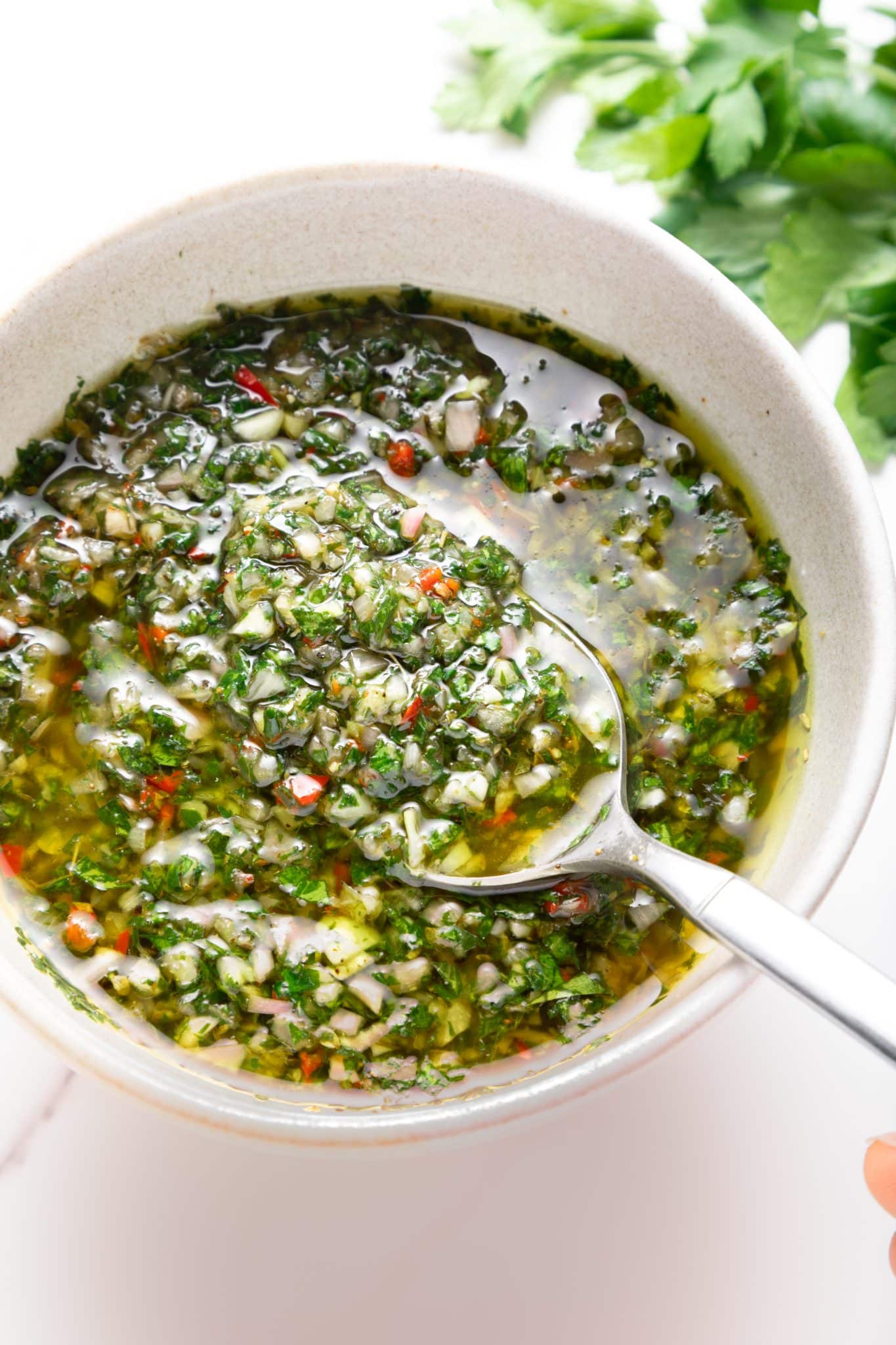
Tired of bland meals? Ready to transform your grilling game from good to absolutely unforgettable? Look no further than the vibrant, herbaceous magic of homemade chimichurri sauce! This isn't just any condiment; it's a bold, flavorful secret weapon that will elevate everything from steak to roasted vegetables, leaving store-bought versions in its dust. Forget those dull, pre-packaged sauces that lack zest and character. Once you learn how to make the best homemade chimichurri sauce recipe, you'll wonder how you ever lived without it.
Hailing from the sun-drenched plains of Argentina and Uruguay, chimichurri is more than just a sauce; it's a culinary philosophy. Traditionally served alongside succulent grilled meats (asado), this fresh green elixir is a testament to simple ingredients yielding extraordinary flavor. Imagine a sauce so bright, garlicky, and tangy that it cuts through the richness of a perfectly cooked steak, awakening your palate with every bite. That, my friends, is the power of authentic homemade chimichurri.
We're here to guide you through crafting a chimichurri that's not just good, but exceptional. We'll dive deep into the essential ingredients, the techniques that make all the difference, and even offer tips to customize it to your personal taste. Get ready to impress your family and friends with a sauce that tastes like it came straight from a five-star restaurant, all made right in your kitchen.
What is Chimichurri and Why You Need It In Your Life?
At its heart, chimichurri is a rustic, uncooked sauce comprised primarily of finely chopped fresh parsley, minced garlic, olive oil, vinegar, and a touch of spice. It's often likened to a pesto, but with a distinctive Argentinian flair and a more assertive tang. Its beauty lies in its simplicity and the incredible flavor it imparts. This bold and vibrant concoction isn't just a topping; it acts as a marinade, a basting sauce, and a dipping sauce all in one, making it incredibly versatile.
But why should you commit to making chimichurri from scratch when there are bottles on the shelf? The answer is simple: freshness and control. Store-bought chimichurri often lacks the vibrant color, pungent aroma, and nuanced flavor that only fresh ingredients can provide. They might contain preservatives, excessive salt, or inferior oils, dulling the very essence of what makes chimichurri so special. When you make it yourself, you control the quality of every ingredient, ensuring a truly superior taste experience. Plus, it's surprisingly quick and easy to prepare, making it a perfect candidate for a last-minute flavor boost.
Think beyond just steak. This incredible quick homemade chimichurri can level up grilled meats like chicken, pork, or lamb. It's fantastic drizzled over roasted or grilled vegetables (think asparagus, zucchini, or bell peppers), fish, shrimp, or even as a zesty dressing for salads. Don't forget to serve it alongside some crusty bread for dipping – it's an experience in itself!
The Secret to the Best Homemade Chimichurri Sauce Recipe
The foundation of an outstanding chimichurri lies in the quality and freshness of your ingredients. While the basic list is simple, understanding the role each component plays is key to mastering this Argentinian chimichurri: fresh parsley & garlic sauce.
Essential Ingredients for Authentic Flavor
- Fresh Parsley: This is the undisputed star. Use flat-leaf Italian parsley for its robust flavor and vibrant green color. Make sure it's fresh, clean, and thoroughly dry before chopping to prevent a watery sauce. One cup, finely chopped, is usually a good starting point.
- Garlic: Don't be shy here! Freshly minced garlic is crucial for that characteristic pungent kick. We recommend around four cloves, but garlic lovers might even add a bit more.
- Red Onion (or Shallots): Finely chopped red onion adds a sharp, slightly sweet undertone and a beautiful textural contrast. Some recipes, like those favored by Food Network, suggest shallots for a more subtle sweetness, which is a fantastic alternative.
- Crushed Red Pepper Flakes: For a gentle warmth that complements the other flavors without overpowering them. You can adjust the quantity to your preferred level of heat, starting with about 1.5 teaspoons.
- Himalayan Salt: Or any good quality coarse sea salt. Salt balances all the flavors and brightens the sauce. Remember to taste and adjust!
The Role of Acidity and Oil
- Red Wine Vinegar: This provides the essential tang and acidity that makes chimichurri so refreshing. It cuts through the richness of grilled meats beautifully. While red wine vinegar is traditional, you could experiment with white wine vinegar or even a squeeze of fresh lemon juice for a different profile.
- Olive Oil: Use a good quality extra virgin olive oil. It's not just a base; it's a flavor contributor. The oil carries the herbaceous notes and helps to emulsify the sauce, creating that rich, satisfying texture. You'll typically need a generous amount, around 1.5 cups, to achieve the right consistency.
Step-by-Step Guide: Crafting Your Perfect Chimichurri
Making chimichurri is less about precision and more about passion. However, following these steps will ensure you get it right every time.
Prep Like a Pro
- Wash and Dry Herbs: Thoroughly wash your parsley and any other herbs (like oregano or cilantro, if using) and dry them completely. A salad spinner works wonders, or pat them dry with paper towels. Excess water will dilute your sauce.
- Finely Chop: The key to chimichurri's texture is finely chopped ingredients. For the parsley and red onion, aim for a consistent, small dice. Mince the garlic finely. If you prefer a smoother sauce, you can run your knife over the chopped ingredients a few extra times.
Mixing Techniques: Hand-Chopped vs. Food Processor
There are two main schools of thought here, and each offers a slightly different result:
- Hand-Chopped (Traditional): This method involves patiently chopping all your herbs, garlic, and onion by hand. The benefit? A beautiful, rustic texture with distinct pieces of herbs and garlic. It's more labor-intensive but arguably yields the most authentic experience.
- Food Processor/Blender (Quick & Easy): For a faster approach, you can pulse the ingredients in a food processor or blender. Be careful not to over-process! You want a textured sauce, not a smooth paste. Pulse 2-3 times, scrape down the sides, and repeat until you achieve a roughly chopped consistency. Chef John's method suggests around 12 pulses, ensuring a thick, textured sauce. Pro Tip: If using oregano, make sure to pluck the leaves off the stems, as hard stems can make the sauce too fibrous.
The Recipe (Using the Hand-Chopped Method for Best Texture):
Ingredients:
- 1 cup fresh flat-leaf parsley, very finely chopped
- 1/4 cup finely chopped red onion
- 4 cloves garlic, minced
- 1.5 teaspoons crushed red pepper flakes (adjust to taste)
- 1.5 teaspoons red wine vinegar
- 1.5 cups extra virgin olive oil
- 1/2 teaspoon Himalayan salt (or sea salt)
Instructions:
- Prep Your Aromatics: In a medium bowl, combine the finely chopped parsley, red onion, minced garlic, and crushed red pepper flakes.
- Add the Tang: Pour in the red wine vinegar.
- Slowly Introduce the Oil: While stirring constantly with a spoon or whisk, slowly drizzle in the olive oil. This gradual addition helps the sauce emulsify, creating a more cohesive texture rather than separating layers.
- Season to Perfection: Stir in the Himalayan salt. Taste your chimichurri and adjust the salt, red pepper flakes, or even a touch more vinegar if needed.
- Let It Mingle: For the best flavor, let your chimichurri sit at room temperature for at least 30 minutes before serving. This allows the flavors to meld and deepen beautifully.
Mastering Your Chimichurri: Tips, Tricks, and Serving Suggestions
Customizing Your Chimichurri
While the classic Argentinian chimichurri: fresh parsley & garlic sauce is perfect as is, don't hesitate to experiment:
- Add More Herbs: A tablespoon or two of fresh oregano (leaves only!) or cilantro can add another layer of herbaceous complexity.
- Spice It Up: If you love heat, consider adding a pinch of dried hot pepper, or even a tiny bit of fresh, finely minced jalapeño.
- Citrus Zing: A squeeze of fresh lime juice can brighten the flavors.
- Smoky Notes: A tiny pinch of smoked paprika or ground cumin (as suggested by Chef John) can add an interesting depth.
- Sweetness: If you used red onion, it offers a slight sweetness. Shallots are another good option for this.
Storage and Longevity
Homemade chimichurri is best enjoyed fresh, but it stores remarkably well. Transfer it to an airtight container and refrigerate for up to a week. The flavors will continue to develop, often tasting even better the next day! If you notice the oil solidifying in the fridge, simply let it come to room temperature before serving and give it a good stir.
Beyond Grilled Meats: Creative Uses
While an ideal partner for steak and lamb, don't limit your chimichurri:
- Marinade: Use it to marinate chicken, fish, or firm tofu before grilling or baking.
- Sandwich Spread: A dollop on a sandwich or burger adds incredible flavor.
- Egg Topper: Drizzle over scrambled eggs or an omelet for a gourmet breakfast.
- Roasted Vegetables: Toss roasted potatoes, carrots, or Brussels sprouts with chimichurri for a vibrant side dish.
- Pasta Sauce: A lighter, fresher alternative to pesto for pasta.
- Dipping Sauce: Serve with warm, crusty bread or even as a dip for fries.
This simple yet profound sauce proves that the most extraordinary flavors often come from the freshest, most basic ingredients. Making your own quick homemade chimichurri is truly the way to level up grilled meats and so much more, promising a burst of Argentine sunshine with every bite.
Say goodbye to dull, store-bought condiments and hello to a world of vibrant flavor! Crafting your own homemade chimichurri sauce recipe is an incredibly rewarding experience that will undoubtedly become a staple in your culinary repertoire. It's fresh, garlicky, tangy, and undeniably better than anything you can buy in a bottle. So grab your fresh herbs, a good olive oil, and prepare to elevate your meals to a whole new level of deliciousness. Your taste buds will thank you!
